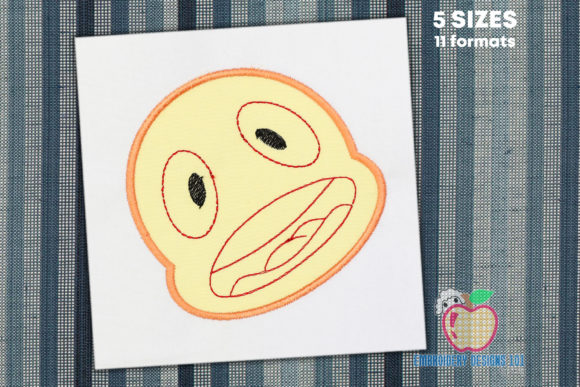
Review: The Face Showing Silly Expression for Business Merch
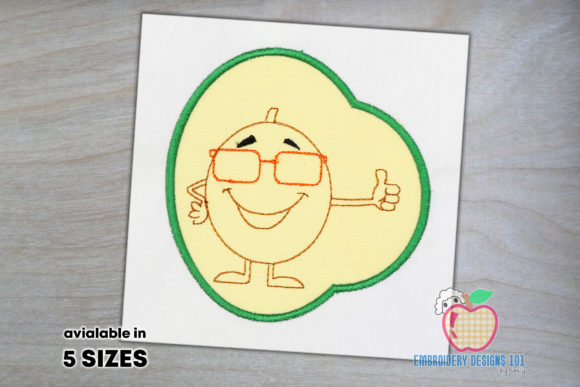
As an embroidery designer who has spent years digitizing logos and reviewing thousands of machine embroidery design files for commercial clients, I approach every new asset with a critical eye. It is not just about whether a design looks cute on a screen; it is about how it performs under the needle, how it translates to fabric, and ultimately, how it serves a brand's identity. Today, I am taking a close look at The Face Showing Silly Expression. While the product description categorizes this under Circus and labels it as an applique for kids, my focus is strictly on its viability for small business merchandise, branded patches, and professional apparel decoration.
First Impressions: Playful Personality with Commercial Potential
Upon loading the digital embroidery file into my editing software, the immediate impression of The Face Showing Silly Expression is one of unapologetic fun. In a market saturated with minimalist, sterile logos, this design offers a burst of personality. It feels friendly, bold, and distinctly handmade. For businesses in the creative sector—such as independent bakeries, pet brands, boutique toy stores, or family-oriented cafés—this visual tone is invaluable. It signals to the customer that the brand does not take itself too seriously and values joy.
However, "silly" does not mean "unprofessional" when executed correctly. The key lies in the execution. The description notes that steps are separated, which suggests a well-structured applique process. This separation is crucial for commercial embroidery, as it allows the operator to pause, trim, and ensure clean edges before proceeding to the next color block. A messy applique edge can ruin the perception of quality, so this structural detail is a promising sign for producing a premium finished product.
Real-World Application for Small Business Merch
So, where does The Face Showing Silly Expression fit in a real-world business scenario? Let us imagine a local coffee shop wanting to upgrade their staff uniforms. Instead of a standard text-only logo on the chest, they could use this face as a sleeve accent or a pocket detail on their aprons. This adds a layer of approachability to the staff, making them seem more welcoming to families and children.
For Etsy sellers and crafters, this design is a goldmine for small business merch. It works exceptionally well as an embroidered patch. Patches are a low-risk, high-reward product line. You can stitch these faces onto denim jackets, tote bags, or sell them as standalone collectibles. Because the design is categorized under Circus, it pairs perfectly with carnival-themed events, birthday party favors, or summer camp merchandise.
Consider a florist or a gift shop looking for unique packaging accents. Stitching this expression onto a small fabric tag attached to a bouquet or a gift basket elevates the presentation from a simple transaction to a memorable experience. It transforms a generic item into a handmade product with soul. Furthermore, for brands selling custom apparel, this design can serve as the central graphic on a child's t-shirt or a playful detail on a parent's matching tee, driving sales through emotional connection.
Technical Considerations and Placement Strategy
While the aesthetic appeal is strong, a professional review must address the technical limitations. The title implies a specific expression, which likely involves detailed stitching around the eyes and mouth. When scaling this design down for a small patch or a cap front, stitch density becomes a critical factor. If the design is too dense, it may cause the fabric to pucker, especially on curved surfaces like baseball caps or on stretchy materials like jersey knits used in t-shirts.
I advise caution when placing The Face Showing Silly Expression on textured fabrics. Heavy canvas tote bags or rough linen aprons can sometimes obscure fine details. If the "silly expression" relies on thin lines to convey emotion, those lines might get lost in the weave of a coarse fabric. In such cases, increasing the satin stitch width or opting for a slightly larger hoop size might be necessary to maintain clarity.
Additionally, consider the background color of the garment. A silly face often relies on contrast. If you are embroidering this onto dark uniforms, ensure that the thread colors provided in the file offer sufficient pop. You may need to manually adjust the color palette in your embroidery software to ensure the eyes and mouth stand out against navy blue or black fabric. Never assume the default thread chart will work for every substrate.
Impact on Brand Identity and Customer Trust
Consistency is the bedrock of brand identity. If a business chooses to adopt The Face Showing Silly Expression as part of its visual language, it must be applied consistently across all touchpoints. Whether it is on a staff apron, a hang-tag, or a promotional tote bag, the quality must remain high. A poorly stitched patch with loose threads or uneven applique placement can erode customer trust, making the brand appear amateurish.
Conversely, when done right, this design enhances recognition. Humans are wired to respond to faces. A silly, happy expression triggers a positive emotional response, increasing buyer engagement. For a small business, this emotional connection can be the difference between a one-time purchase and a loyal customer. It adds value to the product, allowing businesses to potentially charge a premium for items that feel personalized and crafted with care.
Essential Designer Notes for Production
Before running a production batch of The Face Showing Silly Expression, I recommend following these practical steps to ensure commercial success:
- Test in Black and White First: Convert the design to monochrome in your software to check the contrast and definition of the features without the distraction of color.
- Verify Scalability: Stitch a test run at the smallest intended size (e.g., 2 inches) to ensure the details do not merge or become indistinct.
- Check Thread Contrast: Ensure the thread colors chosen provide enough contrast against your specific fabric stock.
- Inspect Spacing: Look closely at the gap between the applique fabric and the tack-down stitch to prevent fraying over time.
- Confirm Hoop Size: Verify that the design fits within your machine's hoop capabilities, especially if stitching on restricted areas like cap fronts.
- Test on Real Fabric: Always stitch a sample on the actual material you intend to use, not just a generic cotton scrap.
- Use Proper Stabilizer: Select a stabilizer that matches the weight and stretch of your fabric to prevent distortion.
- Create a Printable Mockup: Generate a digital mockup to show clients exactly how the design will look on their specific garments before approval.
- Compare Design Assets: Place this design alongside your existing logo elements to ensure visual harmony.
- Confirm Licensing: Since the description mentions multiple formats, double-check the license terms to confirm that commercial embroidery and resale of finished goods are permitted.
The product description states that the file comes with multiple embroidery file formats compatible with various machines, which is excellent for shops with mixed equipment. However, it does not specify exact stitch counts or precise hoop dimensions. As a professional, you must open the file in your digitizing software to verify these metrics before quoting a job or committing to a large order.
In conclusion, The Face Showing Silly Expression is more than just a cute graphic for kids; it is a versatile asset for businesses looking to inject personality into their branding. With careful attention to stitch density, fabric choice, and placement, this embroidery file can become a cornerstone of a successful merchandise line, bridging the gap between playful creativity and professional quality.