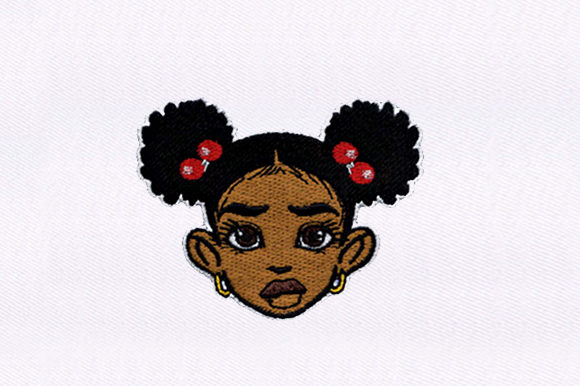
Bun Haired Girl: A Designer's Take on This Charming Motif
When I first pulled up the Bun Haired Girl design on my screen, I didn't just see a digital file; I saw a potential bestseller for a spring boutique collection. As someone who spends more time under a magnifying lamp than I do in the sun, my first instinct is always to critique the flow of the lines and the logic of the stitch path before I even think about thread colors. This particular motif, categorized under Boys in some libraries but clearly possessing a unisex, whimsical charm, offers a distinct visual personality that feels both modern and timeless. It's not just another generic silhouette; there is a specific attitude in the posture and the styling of the hair that suggests movement and life.
First Impressions and Visual Mood
The immediate mood this machine embroidery design creates is one of playful innocence mixed with a touch of urban cool. The "bun" hairstyle is a trendy detail that instantly grounds the character in the current moment, making it highly relevant for today's custom apparel market. When evaluating the layout, the balance between the head, the hair volume, and the body proportions feels solid. For a designer, this means less worry about the image looking distorted once stitched out. The visual weight is distributed well, which is crucial when you are working with fill stitch areas that can sometimes pull or pucker if the density isn't managed correctly.
I imagine this design working beautifully as a focal point on a high-quality cotton tote or as a chest logo on a oversized hoodie. It has enough detail to be interesting up close but remains readable from a distance, a rare combination in many digital embroidery files. The simplicity of the character allows it to blend seamlessly into various themes, from back-to-school gear to casual weekend wear.
Real-World Application: The Boutique Sweatshirt Test
To truly understand the value of an embroidery file, you have to visualize it on a finished product. Let's say I am preparing a run of limited-edition sweatshirts for a local craft fair. I choose a heather grey French terry fabric, a popular choice for its softness and durability. Placing Bun Haired Girl on the left chest area creates an instant brand identity. It feels personal, like a mascot for a creative community.
In this scenario, the design's clarity is paramount. If the stitch count is too high for the fabric weight, the garment will become stiff and uncomfortable. However, assuming the density is optimized, the result should be a soft, flexible handmade product that customers want to wear immediately. The design also translates exceptionally well to a tote bag design. On a canvas bag, the texture of the fabric provides a nice contrast to the smooth threads of the character, enhancing the tactile appeal of the finished product.
For those running an Etsy seller shop or a small online boutique, this type of imagery drives engagement. It tells a story without needing words. Parents might love it for a personalized gift for their daughter, while teens might appreciate the aesthetic for their own custom apparel. The versatility here is the key selling point.
Technical Considerations and Fabric Challenges
While the aesthetic is strong, a professional review must address the technical hurdles. Not every fabric plays nice with every design. When working with Bun Haired Girl, I would exercise caution on highly textured fabrics like heavy waffle knits or loose-weave linens. Fine details, particularly around the facial features or the edges of the hair bun, could get lost or appear jagged if the fabric texture interferes with the needle penetration.
Stretchy fabrics present another challenge. If you are applying this to a thin jersey t-shirt or a stretchy baby onesie, the use of a cut-away stabilizer is non-negotiable. A tear-away stabilizer might seem convenient, but it risks leaving the back of the design unsupported, leading to distortion after the first wash. For baby embroidery projects, comfort is king, so ensuring the backing is soft and non-irritating is just as important as the front appearance.
Dark fabrics require a different strategy entirely. If the design relies on light thread colors, stitching directly onto black or navy fabric can result in the background showing through the stitches, ruining the crispness of the image. In these cases, a layer of white underlay or even a fabric appliqué base might be necessary to make the Bun Haired Girl pop. This adds steps to the production process but significantly elevates the perceived value of the item.
Curved Surfaces and Small Hoops
Applying this design to curved surfaces, such as caps or visors, requires careful hooping. The geometry of the character needs to sit flat; if the hoop tension is off, the "bun" could look skewed. Additionally, if you are looking to use this as a small accent on a pocket or a cuff, you must verify the minimum hoop size required. Shrinking a detailed design too much can cause the stitches to merge, turning distinct lines into a muddy blob. Always check the scaling limits provided with the file formats.
Enhancing Brand Value and Customer Trust
In the world of commercial embroidery, consistency builds trust. Using a high-quality, well-digitized design like Bun Haired Girl signals to your customers that you care about quality. A sloppy stitch-out with thread breaks or poor coverage can damage a reputation quickly. Conversely, a clean, vibrant execution enhances brand consistency and makes your small shop product stand out against mass-produced alternatives.
This design also holds significant potential for printable mockups and digital marketing. Before you even stitch a single thread, you can create compelling visuals for social media or your website. A well-rendered mockup of this character on a trendy garment can generate pre-orders and gauge customer interest, reducing the financial risk of holding inventory.
Practical Notes for the Working Designer
Before committing to a large production run, I always recommend a rigorous testing phase. Here is my checklist for integrating Bun Haired Girl into your workflow:
- Scrap Testing: Always stitch a sample on the exact fabric you intend to use. What looks good on muslin might behave differently on fleece.
- Color Contrast: Experiment with thread palettes. While the default colors might be cute, trying a monochromatic scheme or high-contrast neon threads can completely change the vibe for different seasons.
- Density Check: Inspect the back of the sample. If you see excessive buildup or bird-nesting, the stitch density may need adjustment by a professional digitizer.
- Format Verification: This design comes in a wide array of formats including 10O, ART, CND, DSB, DST, DSZ, EXP, HUS, JEF, PCS, PEC, PES, TAP, VIP, VP3, and XXX. Ensure you select the correct embroidery file for your specific machine model to avoid read errors.
- Licensing Clarity: If you plan to sell items featuring this design, confirm the licensing terms. Some files are for personal use only, while others allow for unlimited commercial embroidery sales.
- Wash Testing: Run the sample through a wash and dry cycle to ensure the design holds up without fraying or fading.
Ultimately, Bun Haired Girl is more than just a pattern; it is a versatile asset for any creative entrepreneur. Whether you are decorating holiday embroidery gifts, creating embroidered patch collections, or stocking shelves for a boutique, this design offers a blend of charm and practicality. With the right preparation and attention to detail, it can become a staple in your portfolio, delighting customers and adding a touch of handmade warmth to everyday items.